11-05-1870: Charitable Donations.

Over a forty year period the company name and many of the employees names were mentioned in numerous columns as having been donors to many institutions.

The Argus, Melbourne, Wednesday 11th may 1870, page 5.

“The secretary for the Victorian Asylum and School for the Blind acknowledges the receipt of the following sums in aid of that institution:-[…]“

“[…].Ferguson, Urie, and Lyon, £1,1s […].”


22-04-1870: The Haymarket Theatre Dispute. Melbourne, Victoria.

The Argus, Melbourne, Friday 22nd April 1870, page 6.

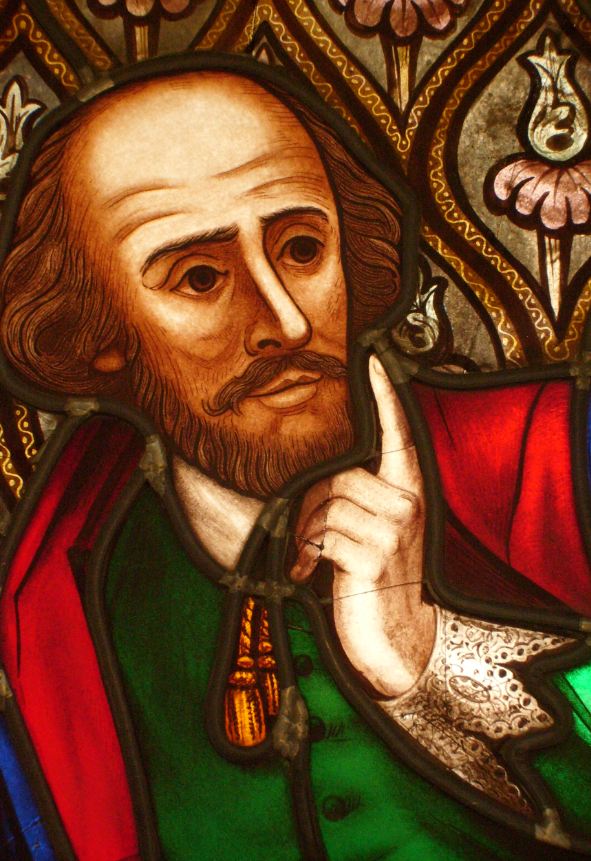
Mr P.T. Conlon, Architect, writes to the Editor of the Argus in an attempt to correct a misinformed statement made by a Mr. Sullivan at a meeting of bondholders of the Haymarket Theatre..

“THE HAYMARKET THEATRE DISPUTE”

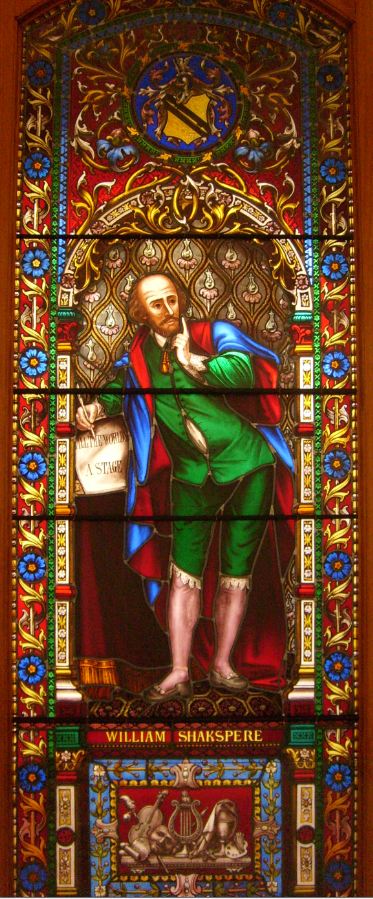
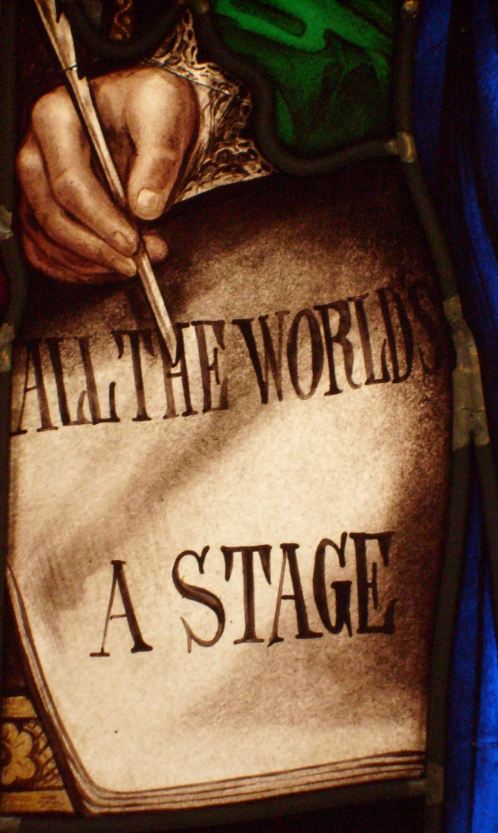
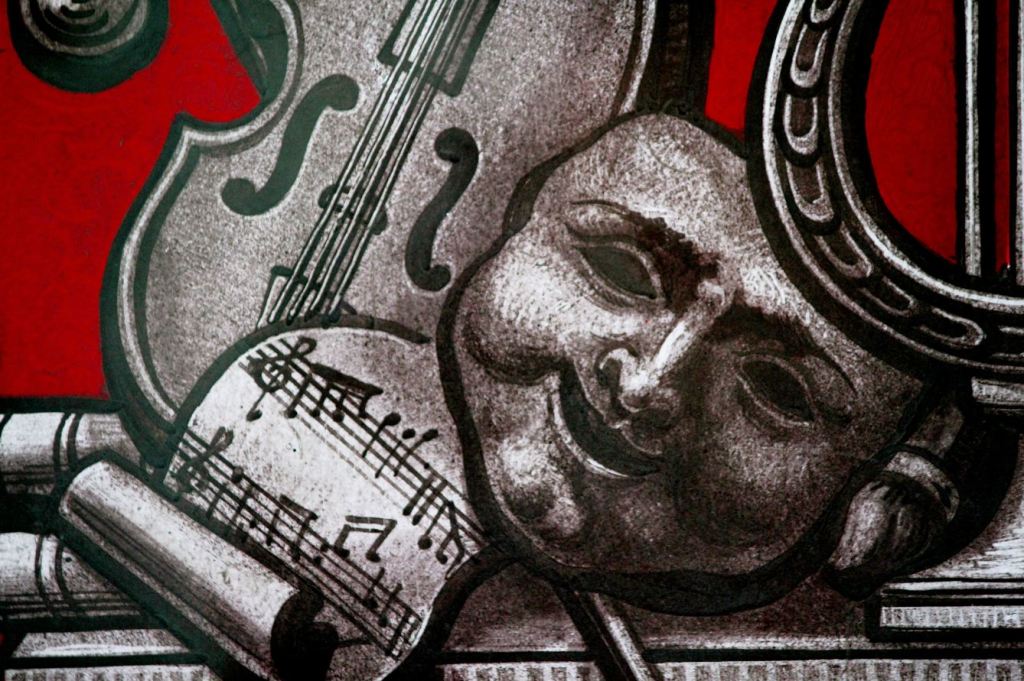
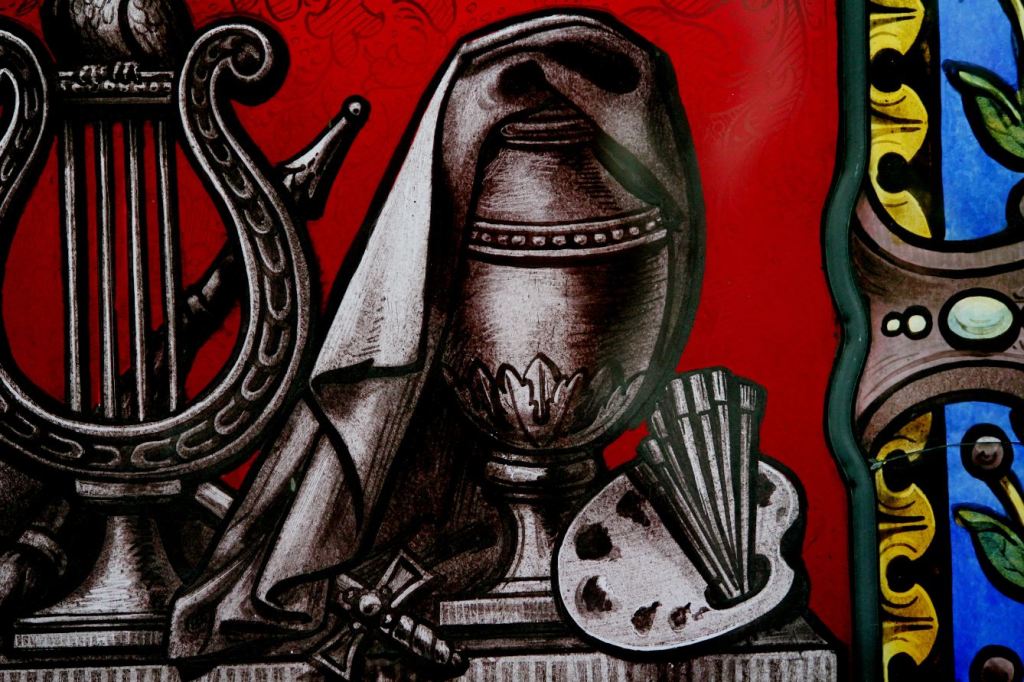
 “Sir, – In the absence of Mr. George Coppin from the colony, will you permit me to contradict a statement made by Mr. Sullivan, at a meeting of bondholders held yesterday, at the office of Mr. Mackenzie. In your report of the meeting in this mornings issue of the Argus, it appears that Mr Sullivan made a statement to the effect that Mr. Coppin had four bonds given to him for certain articles that he provided when the theatre was built, amongst which was a stained glass window that was placed in front of the Apollo-hall. Upon this subject Mr. Sullivan must have been misinformed. The history of the stained glass window, of which so much has been said of late, is simply that in my original specification for building the Haymarket Theatre the whole of the windows in front were to be of plate glass. Messrs. Ferguson and Urie being anxious to introduce their exceedingly beautiful system of imitating stained glass, made an offer to Mr. Coppin to fill in the spaces with their workmanship, at atleast two thirds less than Its actual cost. Mr. Coppin accepted their offer and paid the difference between that and the plate-glass, and to my certain knowledge there was no source from whence Mr. Coppin could obtain the bonus (of four debentures) spoken of by Mr. Sullivan. – I am, Sire, yours, &c. P.T. CONLON, Architect. April 21, 1870.”

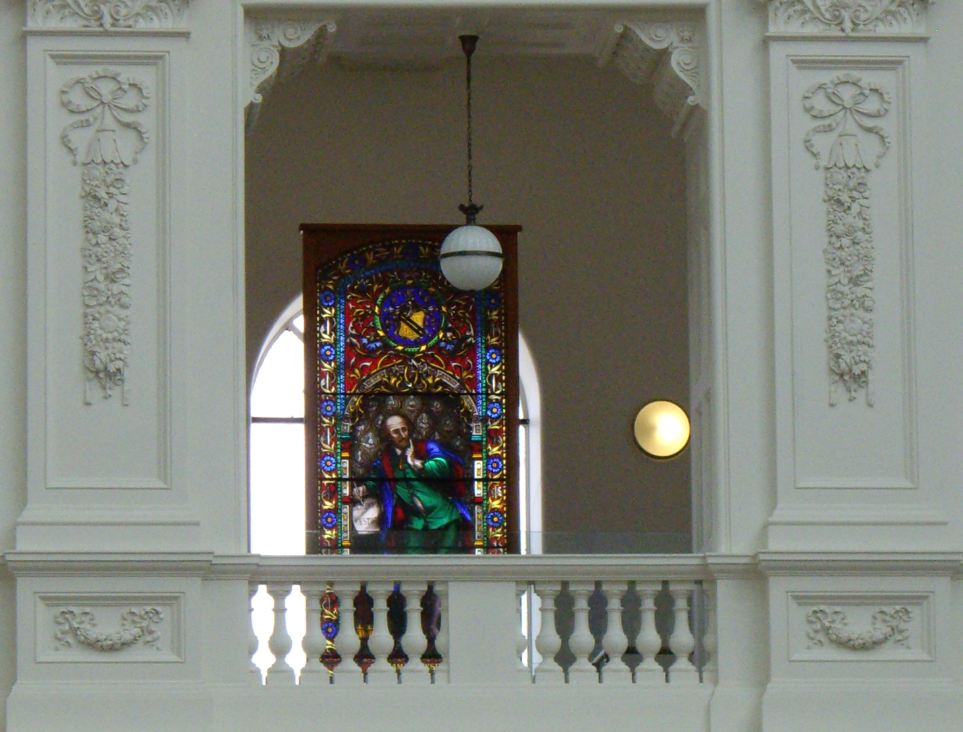
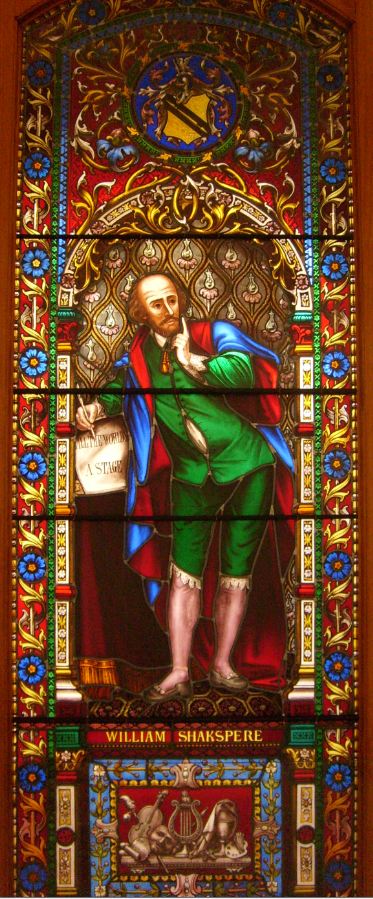
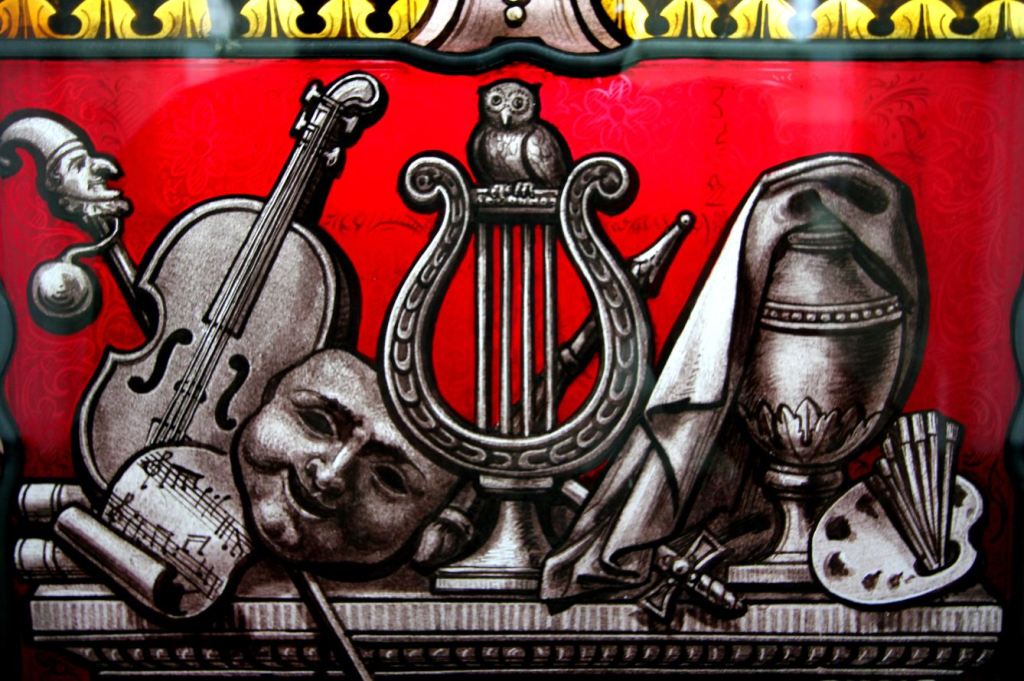
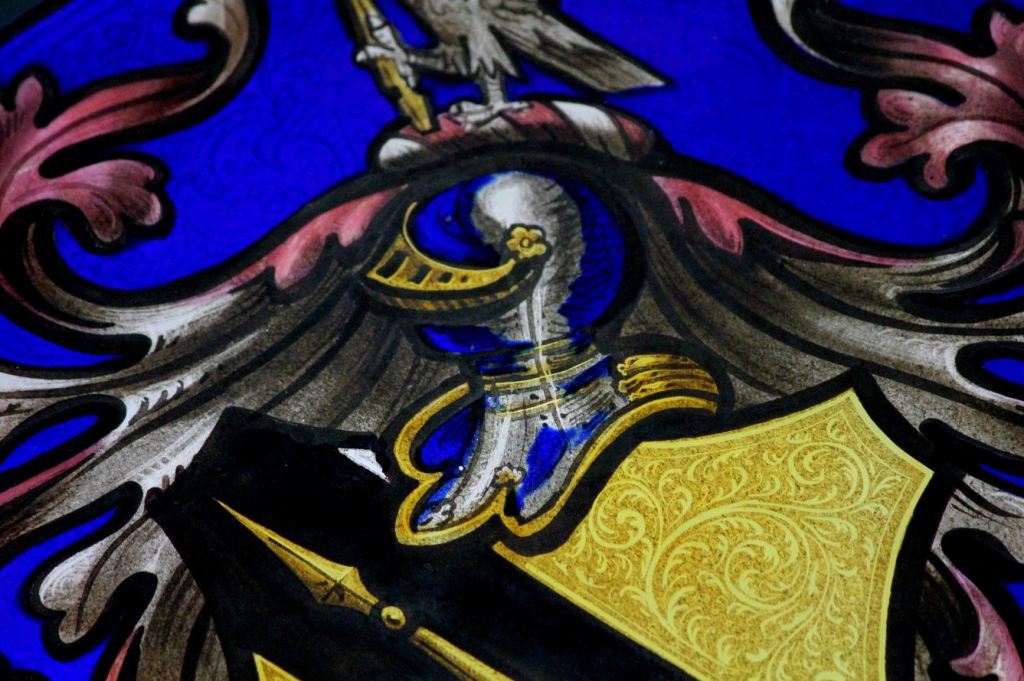
Note: The Shakespeare window now is on display at the State Library in Swanston St Melbourne and was restored by Geoffrey Wallace Stained Glass in 2005.

Shakespeare Window 01

Related posts:

05-07-1862, 12-07-1862 (slideshow), 06-08-1862


Short link to this page: https://wp.me/p28nLD-e4

© Copyright


19-08-1870: Immaculate Conception Church, Hawthorn, Melbourne, Victoria.

South Bourke Standard, Friday 19th August 1870. page 2.

“A meeting of the Catholics of Hawthorn was held in the church of the Immaculate Conception on Sunday last, for the purpose of alloting the eight stained glass windows to those parishioners who had volunteered subscriptions for their purchase. The Rev. Edward Nolan, S. J., occupied the chair, and the windows were alotted as follows:-1. “The Annunciation”, Hon. J. O’Shanassy, M.L.C.; 2. Marriage of the Blessed Virgin Mary and St. Joseph, Robert Hepburn, Esq.; 3. Nativity, and Adoration of the Magi, Hon. M. O’Grady, M.L.A.; 4. The visitation, John McDonald, Esq.; 5. The flight into Egypt, Michael Lynch, Esq.; 6. The Carrying of the Cross, Mrs. Walsh and Mrs. Norton; 7. Crucifixion, Wm. Henry Archer, Esq.; 8. Entombment and Taking Down from the Cross, Mrs. Conran, and Mrs. E. J. Prevot, per Hon . M. O’Grady. The reverend chairman received warm congratulations from his flock on his return from New Zealand invigorated with renewed health”.

The slideshow of the windows has been arranged in order as per below:

1.”The Annunciation“, Hon. J. O’Shannassy, M.L.C.
2.”The Marriage of the Blessed Virgin Mary and St. Joseph“, Robert Hepburn, Esq.
3.”Nativity and Adoration of the Magi“, Hon. M. O’Grady, M.L.A.
4.”The Visitation“, John McDonald, Esq.
5. “The Flight into Egypt“, Michael Lynch, Esq. [1]
6. “The Carrying of the Cross“, Mrs Walsh and Mrs Norton  [2]
7. “Crucifixion“, Wm. Henry Archer, Esq
8. “Entombment and Taking Down from the Cross“, Mrs. Conran and Mrs. E.J. Prevot,, per Hon. M. O’Grady.

All eight windows were created by Ferguson & Urie. There are 42 photos in this slideshow showing various detailed close-ups. The links above (1 to 8) will display the main window image on it’s own.

This slideshow requires JavaScript.

Related posts: 11-10-1869

[1] Michael Lynch was the builder of Grace Park House in Hawthorn. In the 1860s he donated the land on the corner of Burwood road and Glenferrie road to the Catholic Church for the purpose of constructing the Immaculate Conception church. Inside the church are two memorials to the family, a small plaque the front of the church and the stained glass window “The Flight into Egypt” on the left as you go in the main entrance.

[2] The window “The Carrying of the Cross”, actually has the names Scott & Norton on it and not Walsh and Norton.

© Copyright

11-10-1869: Immaculate Conception, Grace-Park, Hawthorn, Melbourne, Victoria.j

The Argus, Melbourne, Monday 11th October 1869, page 5.

“The Opening of the Church of he Immaculate Conception, Grace-park, Hawthorn, took place yesterday forenoon. …”

 “… With the view of having the church ready for the ceremony of yesterday, some work had to be left undone. For instance, only the windows in the clerestory have been permanently filled in. They are filled in with stained glass having various emblems of the Virgin Mary, St Joseph and the Apostles. This is the work of Messrs Ferguson and Urie. The stained glass for the lower windows has yet to be filled in. It will be of a larger and more handsome pattern, and will represent different incidents in the life of Jesus…”

Photos taken 13th March 2011.

This slideshow requires JavaScript.

Note: There is some confusion about this window. The window described as being by Ferguson & Urie above contains the Virgin Mary, St Joseph and the Apostles but it is obviously not installed as a clerestory window. The church has this great west window recorded as being by Mayer of Munich, which is correct and was not installed in readiness for the church opening in October 1869. No ‘clerestory’ windows were identified with similar depictions. The liturgical west window was erected in 1875 and most likely only installed by Ferguson & Urie.

The noticeboard just inside the church records the following information:

Immaculate Conception Church, Hawthorn, Noticeboard historical articles, 13th March 2011.

“THE ASCENSION WINDOW”

The large window at the back of the ICC is called the Ascension Window since it depicts this event. Mary and the eleven apostles are shown in the lower part of the window.(Mathias has not yet been been chosen to replace Judas). In the upper part of the window, angels welcome and escort the ascended Christ into heaven. It was made by Mayer of Munich (Germany). It represents the Ascension of Our Lord copied from a celebrated painting by the artist Raphael. The window was installed in the church in readiness for the opening in October 1869 [sic]”.

Related Posts:

19-08-1870 (The eight Ferguson & Urie windows in the nave)

© Copyright

04-10-1869: St Matthew’s Uniting Church, Scallan Street, Stawell, Victoria.

St Matthew’s Presbyterian church at Stawell was designed by Architect R.A. Love, formerly of Sandhurst (Bendigo). The foundation stone was laid on the 21st of May 1868 and officially opened in 1869. The apse stained-glass window, created by Ferguson & Urie, cost £120.

St. Matthew’s also contains a chancel window and a single light window in the nave window by Ferguson and Urie which is a memorial to the infant Florence Grant, The the subject of the nave window being “Suffer little children”.

This slideshow requires JavaScript.

Illustrated Australian News for Home Readers, Melbourne, Monday 4th October 1869, page 195.

 “THE PRESBYTERIAN CHURCH, PLEASANT CREEK.”

 “Another instance of our architectural progress is presented in the new Presbyterian Church which was opened at Pleasant Creek in May last …”

 “… The building is lighted by a double row of windows containing diamond lights, with variously colored borders; of these there are fourteen on either side, in addition to one beautifully stained window, inserted in the apse immediately behind the minister’s platform, which is placed in a recess, at the extreme end of the edifice…”

Florence was the two year old daughter of Edmund Craigie Grant and Elizabeth Ann Parkinson. She was born at Pleasant Creek (Stawell) in 1867 and died at the age of 2 years and sixteen days on the 2nd of October 1869.

The Argus, Melbourne, Friday 8th October 1869, page 4.
“GRANT.-On the 2nd inst., at the Quartz Reefs, Pleasant Creek, of inflammation of the lungs, Florence, infant daughter of Edmund and Elizabeth Grant, aged two years and 16 days.”

The Florence Grant window was one of the first stained glass windows to be erected in the nave of the church and has the following text:
“Suffer Little Children to Come Unto Me”
“SACRED TO THE MEMORY OF FLORENCE GRANT”

An entry in the St Matthews church  booklet about this window has (as at 2010) incorrectly recorded Florence as the wife of Edward Grant instead as being his  infant daughter.

Her father, Edmund Craigie Grant, was a wealthy gold miner who formed the firm of Grant, Lamont & Co in 1856 and was the first to erect a Chilean Mill quartz crushing machinery at Concongella Creek in 1857. He also had built their now heritage listed home “Alvie” in 1868 and was also generous patron of St Matthews Church in Stawell to which he donated the funds for the Spire and the organ.  He is also remembered by a marble memorial plaque in the church.

Florence’s’ younger brother William was born the year after she died. William was Brigadier-General William Grant who led the famous charge of the 4th Light Horse Brigade at Beersheba in World War I.

As personally seen on the 11th of June 2011, the Ferguson & Urie apse window can only be partially viewed as an organ has been installed directly in front of it and a brick wall has been erected behind it which has completely obscured any outside light whatsoever. It would have been much more palatable if the church had considered donating the historical window to a state museum rather than bricking it in and obscuring completely.  The current property manager understands the historical significance of the apse window and has made his own attempts to try and install flood lights behind the window in the brick cavity but as a noble attempt this is, it’s essentially fruitless unless the entire organ gallery is removed from in front of the window.

The clerestory windows with simple colored borders all look to be original by Ferguson & Urie.


Short link to this page: https://wp.me/p28nLD-cz

© Copyright

1869: St Peter’s Pebble Church, Carapooee, Victoria.

St Peter’s Anglican Church Carapooee.

St Peter’s Church at Carapooee, known as the “Pebble Church”, is about thirteen kilometers south of St Arnaud in western Victoria.

Originally the area was called ‘St Peter’s Diggings’ but known by the local Aborigines as ‘The Carapooee’, (“an earthly paradise”). The church was designed by architect Leonard Terry and Mr. Valentine Nott Mogg of ‘Swanwater Station’ laid its foundation stone in May 1869. The church is constructed of white quartz pebbles in varying sizes which are set in pinkish colored mortar. The pebbles were collected by locals from miners’ claims in the nearby hills. Valentine Mogg’s ‘Swanwater Station’ was also constructed of quartz pebbles in the same manner but there is supposedly no other church in Victoria constructed this like this.

The first service was held in St Peter’s in July 1870 with a formal opening taking place in October 1874.

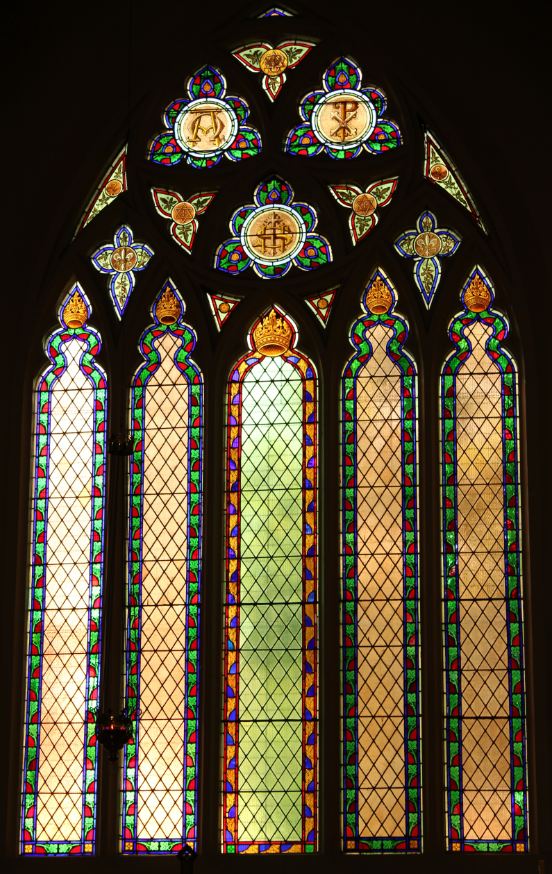
The simple stained glass windows are of plain diamond quarries with red and blue stained glass borders and were supplied by the Colonial Victorian Stained Glass firm Ferguson & Urie of Melbourne.

Photos taken 11th June 2011.

This slideshow requires JavaScript.

The last service and deconsecration of the Carapooee “Pebble Church” occurred on the 2nd of June 2019.


Short link to this page:https://wp.me/p28nLD-ch

© Copyright


17-04-1869: An Art Treasures Exhibition is held at the hall of the Public Library Melbourne.

The South Australian Register, Saturday 17th April 1869, page 3.

 “[…] Several additions have been made to the Exhibition, and among the most remarkable is a painted window, illustrative of the seasons, the work of Messrs. Ferguson, Urie & Lyon, glass-stainers of Hotham[…].”

 Note: This refers to the window for John Wilson’s mansion “Woodlands” near Ararat in western Victoria.

Related posts: 13-04-1869 > 1868

31-08-1868: St. Mary’s Church, Queensberry street, North Melbourne, Victoria.

In 1868 it was reported that the Ferguson & Urie stained glass company had prepared the designs for a 22ft high five light window depicting the Virgin Mary and the Crucifixion for St Mary’s church in Queensberry Street, Hotham, at an estimated cost of £375. The window was never actually created by Ferguson & Urie!

The Argus Melbourne, Monday 31st August 1868, page 6.

ST MARY’S CHURCH, HOTHAM…”

“… One of the noticeable features of this church is its windows. Those in the gables of the transepts are “four-light” windows, and of good size, but the finest of all is that of the chancel, which is the principal window of the church and one of the largest in Melbourne. It is twelve feet wide, and twenty-two feet high, and contains five “lights,” the mullions being of free-stone, beautifully carved. It is intended, when funds permit, to fill this window with stained glass, each “light” or compartment containing a design illustrative of some memorable scriptural incident in the life of the Virgin Mary. The design for the centre light will be the Crucifixion of the Saviour, with the Virgin Mary and St. John at the foot of the cross, and the subjects for the other compartments will include the Annunciation, the Adoration of the Magi, &c. The designs for this window have already been partly prepared by Messrs. Ferguson and Urie, and the estimated cost of carrying them out is £375. The remainder of the windows will be fitted with plain cathedral glass….”

Although it was reported that Ferguson & Urie had ‘prepared’ the designs, the window was never made by them. The window remained as plain cathedral glass for a further twenty years before being made by Smyrk & Rogers of Little-Collins street east in 1888 who were also responsible for most of the others in the church.

St. Mary's, Hotham, Nth Melbourne, Rogers & Co stained glass

St. Mary’s, Hotham, Nth Melbourne, stained glass by Smyrk & Rogers in 1888 (Photo: 12 Dec 2012)

See Stained Glass Australia web site post: 27-10-1888 St Mary’s Anglican Church, North Melbourne, Victoria, Australia.

© Copyright

06-08-1862: The Apollo Music Hall Shakespeare window.

The Argus, Melbourne, Wednesday 6th August 1862, page 5.

WEDNESDAY, AUGUST 6, 1862. (1862, August 6). The Argus (Melbourne, Vic: 1848 – 1956), p. 4. Retrieved February 22, 2012, from http://nla.gov.au/nla.news-article5719688

“A creditable specimen of art-manufacture has just been completed by Messrs. Ferguson and Urie, of Curzon street, North Melbourne, at the Apollo Concert Hall in this city. It is a stained glass window, in three compartments; the centre representing a full-length portrait of Shakespeare, copied from Roubillac’s faulty statue; and the side lights being filled with figures of Hamlet, Falstaff, Beatrice, and Lady Macbeth. The primary colours employed are brilliant and transparent; and the upper and lower portions of the central window, as well as its border, possess much merit both as regards design and colour; but the figures have been less successfully treated. That of Lady Macbeth is deformed, and resembles a washerwoman much more than the sublime sleep-walker. Hamlet and Beatrice appear to be portraits of John Kemble and Mrs. Mowatt respectively, and are less open to objection. But the skill of he artist is chiefly shown, as we have said, in the subordinate details of the window; and remembering the difficulties under which this art is pursued, even in Europe, owing to the nice proportions which require to be observed in the composition of the fluxes and the colouring matter, and the extreme care which has to be bestowed upon every stage of the process, the colonial manufacturers are to be complimented on the success which they have already achieved, and on the execution of a work which contains the promise of future excellence in the management of an intractable material and in the employment of delicate agencies”.

Quite an amusing description of the window I must say!

Also see related posts:

05-07-1862

12-07-1862 (photos)

External links:

Lady Macbeth (Sleepwalking scene)

26-06-1868: St. John’s Anglican Church, Toorak, Melbourne, Victoria.

The liturgical east window of St John’s in Toorak is a memorial to William Crocker Cornish who died in 1859 and his wife Jane (née Rowell), who died in 1867.

The four light window represents the Nativity, Baptism, Crucifixion and Resurrection and was made by Ferguson & Urie of North Melbourne in 1868.

In 2010, the Verger of St. John’s church told me that the window was restored sometime c.1960’s and when it was reinstalled the lower panels of two windows were installed out of sequence. The verse, “John, Chapter, 19, Verse 16” (The Crucifixion) is installed beneath the scene of the Baptism and the verse “Mark, Chapter 1, Verse 10” (The Baptism) is installed beneath the Crucifixion scene.

In 1984 Australia Post issued a prepaid Aerogram envelope for Christmas that depicted the Nativity scene from this window at St. John’s. I obtained a mint specimen of it from a collector in 2010 and a copy is shown in the slide show of photos. In Feb 2013 one of Ferguson & Urie’s original designs was found for this window amongst the State Libraries Collections and a copy of the design is also included along with its comparison to the window as seen in 2010.

Photos – 31st October 2010.

This slideshow requires JavaScript.

[View larger images]

The Cornish family are buried at the Melbourne General Cemetery. Their monument is amongst the more elaborate gravestones in the cemetery and as can be expected it has degraded significantly over nearly a century and a half. Photos of the monument were taken 19th October 2014 and these maybe the last images of it before the spire topples and the memorial text can no longer be read. Hopefully their memorial stained glass window at St John’s in Toorak will be looked after better and last for many more centuries.

Significant transcriptions:

The Argus, Melbourne, Friday 26th June 1868, page 5.

 “MEMORIAL WINDOWS”

 “…The window in the church at Toorak has been raised to the memory of the late Mr. Cornish, by Mr. and Miss Cornish. It is the work of Messrs. Ferguson, Urie, and Lyon, of this city, and does high honour to their skill and art. The architecture of the window, being of the decorated Gothic style, is eminently favourable to the development of a rich and harmonious style of colouring. The design of the stained glass is to illustrate the principal events in our Saviour’s life – the nativity, baptism, crucifixion, and resurrection. In the first, we have the Virgin with the child in her arms, Joseph hanging over her, and the shepherds looking intently at the babe. The second represents the baptism at the Jordan, and the third the crucifixion. The latter is peculiarly well treated, and the figures of St. John at the one side, the Virgin at the other, and Mary Magdalene at the foot of the cross, are full of mingled sorrow and affection. In the last, the resurrection, the Saviour is represented emerging from the tomb, while an astonished soldier falls down before him. The figure is full of majestic dignity, and the folds of the mantle in which he is enveloped hang about him with natural grace. In the top tracery is the ascension witnessed by St. John and the Virgin. The last two are in medallion form, and are exceedingly well executed; the softness and heavenliness of expression in the Virgin’s face almost approaching that of some of the pictures of the Madonna. In the trefoil pieces are signs of the four evangelists, and in other parts of the tracery the “Agnus Dei,” and certain scripture texts. The colours of the picture are exceedingly well chosen; brilliant and effective, as all glass painting ought to be, but at the same time harmoniously and tastefully blended. A process of colouring has been adopted more suitable to the clear light of our atmosphere, and the consequence is that the window possesses a richness of tone, which agrees well with the style of art to which it belongs. We may add, that the chancel of the church in which this window is placed promises to be one of the most richly-decorated in the colony. At each side of the central window are two tablets of the law, in a highly illuminated style of writing; underneath are to be three tablets – one with a Calvary cross, and the other two with texts in scroll work; and the remainder of the space is being covered with an ornamental design in stencilling – the last work being performed by the ladies of the congregation. The side windows are also to be filled with stained glass representations of Faith, Hope, and Charity. A very fine altar-cloth has been recently received, as a present, from Mr. John King. It is made of rich Utrecht velvet, and has a large cross, studded with precious stones, in the centre.”

Illustrated Australian News for Home Readers, Melbourne, Friday 10th October 1873, page 170.

“The Church of St. John the Evangelist, Toorak, is erected on a site given by Mr. Alfred Ross, forming part of the Orrong estate, at the angle formed by the Gardiner’s Creek and Clendon roads. The foundation-stone was laid by Sir Henry Barkly in April, 1860. The designs were made by Mr. W. W. Wardell, architect, presented to Mr. Henry Dauglish, one of the trustees, and carried out by Mr. F. M. White, architect. Messrs. Gosling Brothers were the contractors. The opening services were celebrated on Sunday, 13th July, 1862, by the Rev. Dr. Bromby, who continued as officiating minister during a period fifteen months, until the arrival from England of the Rev. Walter Fellows, B.A., of Christ Church, Oxford, since which time the congregation has steadily increased…”

“…The chancel is 20 feet deep, having a four-light window, enriched with tracery and filled with stained glass representing the Nativity, Baptism, Crucifixion and Resurection of our Lord; also on the north side is a smaller two-light window…” 

The Argus, Melbourne, Vic, Friday 1st April 1859, page 4.

“DEATH of MR. CORNISH. – We announce with great regret the death of Mr. Cornish, of the firm of Cornish and Bruce, the contractors for the Melbourne and Murray River Railway. Mr. Cornish expired yesterday afternoon at his residence, at Brighton, after a lengthened illness, at the age of 44 years. The medical gentlemen in attendance upon him (Drs. Motherwell, Ford, and Brownless) ascribe his death to a complication of maladies, arising from disorganisation of the heart, the liver, and the lungs, and there is no doubt that these have been aggravated to a very considerable extent by the mental harassment and anxiety which are inseparable from the important business responsibilities in which he has been involved. The immediate cause of death, however, is said to be effusion into the pericardium – water on the chest – from which complaint he has for several months been a sufferer. The death of Mr. Cornish, in the midst of the vast undertaking in which he has been actively and successfully engaged, must be regarded as a great calamity, and will excite feelings of deep regret throughout the community. We believe that the funeral will take place on Monday.”

The Argus, Melbourne, Vic, Saturday 2nd April 1859, page 8.

“THE Friends of the Late WILLIAM CROCKER CORNISH, Esq. (of the firm of Cornish and Bruce, railway contractors), are respectfully invited to follow his remains to the place of interment, in the Melbourne General Cemetery. The funeral procession is appointed to move from his late residence, Myrtle Grove (opposite the residence of J. Bignell, Esq.) Brighton, at 1. and pass the Prince’s Bridge about 3 o’clock, on Monday, April 4. JOHN SLEIGHT, undertaker, 71 Collins-street east.”

The Argus, Melbourne, Vic, Tuesday 5th April 1859, page 4.

“FUNERAL OF THE LATE MR. CORNISH. – The remains of this gentleman were yesterday consigned to their resting-place in the New Cemetery, Melbourne. The cortége left the residence of the deceased, at Brighton, at 1 p.m., arriving at Prince’s Bridge shortly after 3 o’clock. At this portion of the route the procession was joined by a large number of friends of the late Mr. Cornish in vehicles and on horseback, also by a party of work- men employed by Messrs. Cornish and Bruce, on foot. The religious services at the place of burial were performed by the Rev. S. L. Chase, the principal mourners being the three sons of the deceased and his late partner, Mr. Bruce.”

The Sydney Morning Herald, NSW, Wednesday 8th May 1867, page 1.

“On the 7th instant, at Petty’s Hotel, of paralysis, JANE, widow of the late W. C. CORNISH, of Melbourne, aged 44 years.”

St John’s – its story for seventy years, 1860-1930, page 23.

“THE EAST WINDOW is an old Melbourne work by Fergusson and Ure [sic], and was erected in memory of William and Jane Cornish, who died in 1859 and 1867 respectively. It represents the leading incidents in the Life of Christ. Like the West Window, it has latterly been “graded” with a tinted glass outside to protect it, and also to lower the primary colouring.”


Short link to this page: http://wp.me/p28nLD-av

© Copyright